







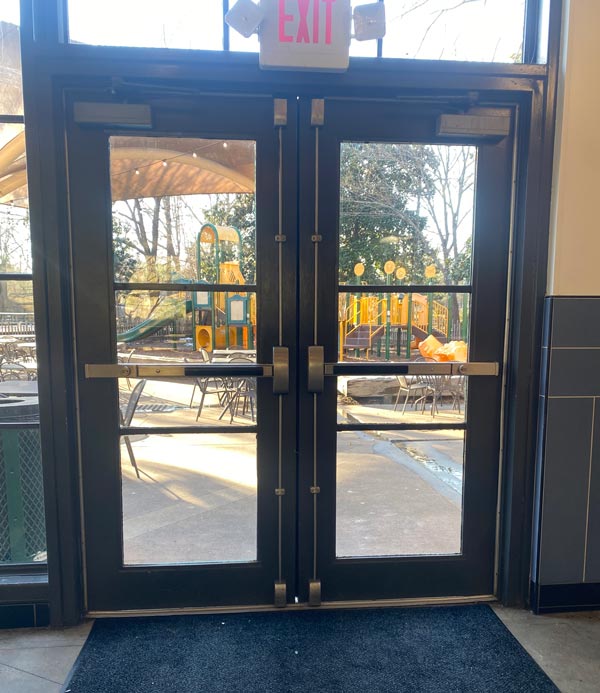
What a Commercial Door Closer Actually Does
A door closer is a hydraulic or pneumatic device mounted to the door frame or door body that controls the speed and force of a door as it closes. It prevents slamming, ensures the door latches completely, and in fire-rated corridors, it keeps the door from remaining open during an emergency. Commercial-grade closers handle far more cycles per day than residential hardware. A front entrance at a busy Memphis restaurant or medical office might cycle hundreds of times daily, putting real stress on the internal fluid and spring mechanisms.
When a closer starts leaking hydraulic fluid, losing tension, or closing too slowly to latch, it can put your property out of compliance with ADA requirements and fire codes. The commercial locksmith services we provide at The Lock Doc include door closer inspection, adjustment, and full replacement when hardware is beyond repair.
How Often Should You Service Commercial Door Closers?
A practical maintenance schedule for most Memphis businesses looks like this:
- Monthly visual check: Look for fluid leaks around the closer body, confirm the door closes completely and latches without assistance, and verify that closing speed feels consistent.
- Every 6 months: Inspect and tighten all mounting screws, test the backcheck function if your closer has one, and check the arm and shoe for wear or corrosion.
- Annually: Have a professional inspect the full unit, adjust sweep and latch speed valves, and assess whether the closer is appropriately sized for the door weight and traffic volume.
High-traffic doors, exterior doors exposed to Memphis summers, and doors in industrial environments may need professional attention more frequently. Heat and humidity accelerate fluid breakdown inside hydraulic closers, which many building managers don’t account for when setting maintenance intervals.
Signs Your Door Closer Needs Attention Now
You don’t always need to wait for a scheduled inspection. These are clear signals that a closer needs adjustment or replacement sooner rather than later:
- The door slams shut instead of closing at a controlled speed
- The door closes too slowly and fails to latch on its own
- You see an oily residue or staining around the closer body
- The door drifts open after being released
- The arm or shoe connection feels loose or makes noise during operation
- The closer body is visibly cracked or bent
A closer that leaks hydraulic fluid cannot be refilled and should be replaced. Adjusting the speed valves on a leaking unit won’t restore proper function, and attempting it leads to repeat service calls.
Closer Maintenance as Part of a Broader Door Hardware Plan
Door closers don’t operate in isolation. The condition of the door frame, hinges, and threshold all affect how well a closer performs. A door that has shifted due to a settling frame or warped from moisture puts extra strain on the closer mechanism, even if the closer itself is in good shape. Pairing closer maintenance with regular inspection of the full door assembly produces better results and longer hardware life.
For properties with master key systems or integrated access control, door closer condition also affects how well electronic strikes and magnetic locks function. A door that doesn’t close fully and consistently will create problems for any hardware that depends on proper door position to operate.
When to Upgrade Instead of Repair
Older commercial closers, particularly those installed more than 10 to 15 years ago, may not meet current ADA opening force requirements or fire code specifications. If your building has gone through a renovation, changed occupancy type, or added new tenants, it’s worth having your door hardware reviewed against current requirements. Upgrading to a current-generation closer gives you more precise control over closing speed, backcheck tension, and delayed action features that older units don’t offer.
Businesses exploring broader security upgrades can look at how door hardware connects with access control systems and commercial alarm and CCTV solutions for a more complete picture of building security.
Get Your Commercial Door Hardware Inspected by The Lock Doc
We provide mobile commercial locksmith services across Memphis, Shelby County, Cordova, Bartlett, Germantown, Collierville, and surrounding Mid-South areas. Whether you need a closer adjusted, replaced, or want a full door hardware assessment, our team comes to your location with the tools and parts to handle the job on-site. We work on commercial properties of all sizes, and all of our lock and hardware work is backed by a 6-month warranty. Reach out through our contact page to schedule service at your property.